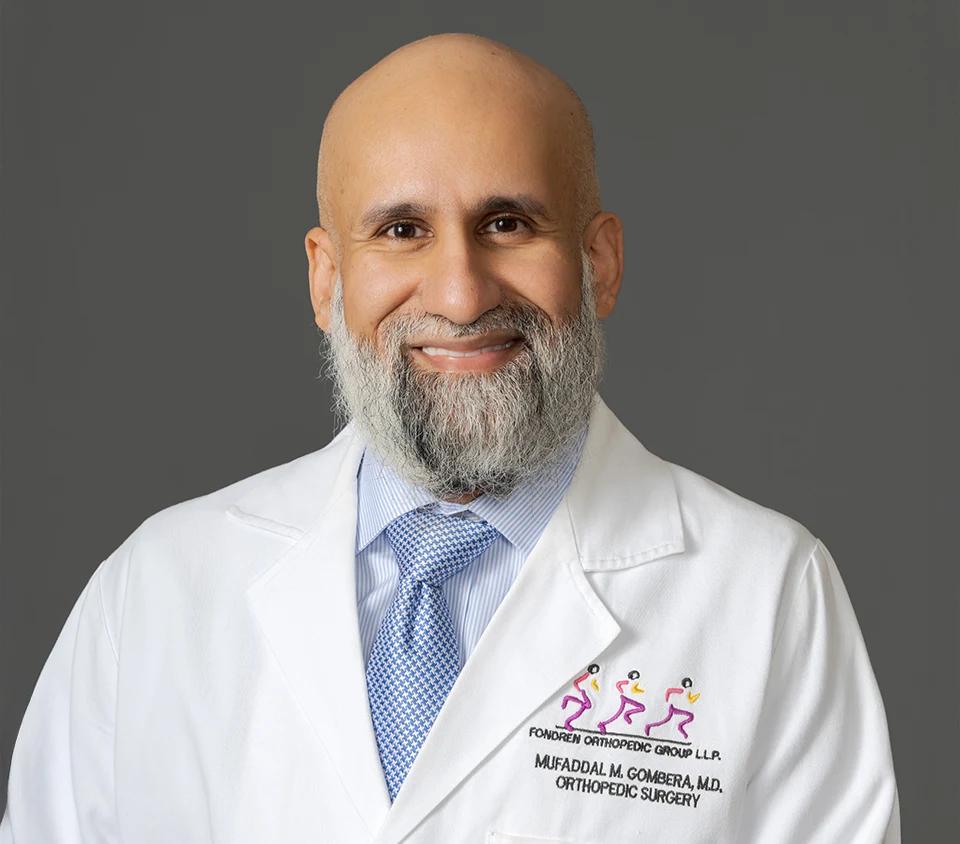
Medically reviewed by Mufaddal M. Gombera, MD, Board-Certified Orthopedic Surgeon.
Dr. Mufaddal Gombera has performed more than 3,000 hip arthroscopies, including over 1,000 using a postless technique, and labral repair is at the center of that work. He has served as Director of the Hip Preservation Center at Texas Orthopedic Hospital since 2015. His approach is straightforward: repair the labrum whenever tissue quality allows, rebuild it with a graft when it cannot be saved, and remove it only as a last resort.
What Arthroscopic Labral Repair Fixes
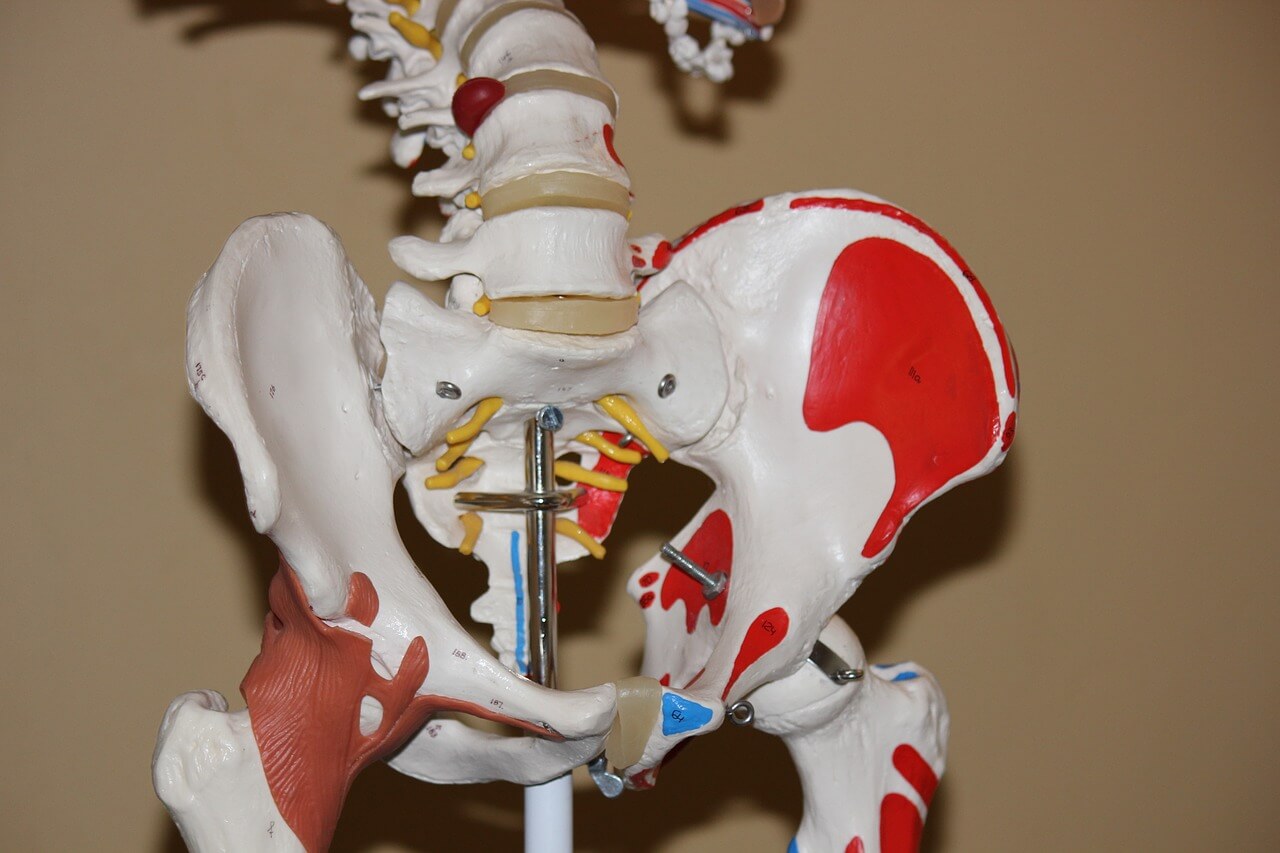
Arthroscopic hip labral repair reattaches the torn labrum, the ring of cartilage that seals the hip socket, back to the bone it pulled away from. Through two or three quarter-inch incisions, Dr. Gombera places small anchors in the socket rim and stitches the labrum securely against it, restoring the suction seal that steadies the joint and protects its cartilage. If you have not yet confirmed your diagnosis, start with our hip labral tear page. This page covers the operation itself.
Repair First: The Approach
The labrum is worth saving, and that belief shapes how the surgery is done. For years the standard operation was debridement, shaving away the torn tissue. It is faster, but it gives up the labral seal, and hips without a working labrum put more stress on the cartilage. Repair keeps the tissue and its function and is linked to better long-term results. Dr. Gombera repairs the labrum whenever tissue quality allows, which is the large majority of cases, and uses debridement only for minor fraying that does not affect the seal.
A labral tear almost always has a cause, most often femoroacetabular impingement (FAI), extra bone that pinched the labrum until it tore. Dr. Gombera reshapes that bone during the same procedure so the repaired labrum is not crushed with every deep bend. Fixing the tear without the cause is how repairs fail.

Debridement vs. Repair vs. Reconstruction
| Debridement | Repair | Reconstruction | |
| What it does | Trims away the torn tissue | Reattaches the labrum with anchors and sutures | Rebuilds the labrum with graft tissue |
| Keeps the suction seal | No | Yes | Yes (restored) |
| Best for | Minor fraying that cannot hold a stitch | Most tears, when tissue quality is adequate | A labrum that is absent, calcified, degenerated, or too small |
| Dr. Gombera’s use | Last resort only | First choice (the large majority of cases) | When repair is not possible, including revision cases |
Labral Reconstruction: Rebuilding a Labrum That Cannot Be Saved
Some labrums are beyond repair. For those patients, reconstruction rebuilds the ring with graft tissue. Candidates include labrums previously debrided or removed, tissue that is calcified or degenerated, and labrums that are too small to hold stitches. Using the same arthroscopic approach, Dr. Gombera removes the nonfunctional remnant and secures a graft, either donor tissue or the patient’s own, along the socket rim to recreate the suction seal.
Reconstruction matters most for two groups: revision patients who were told their labrum is gone and nothing can be done, and younger patients facing decades of activity on an unsealed joint. It is a demanding technique offered by relatively few hip arthroscopists and a core service of the Hip Preservation Center.
Discover Your Ortho Options
Who Is a Candidate
Good candidates share three things: a symptomatic labral tear confirmed on imaging, a real trial of conservative care that has not held, and cartilage healthy enough for repair to pay off. Age matters less than cartilage quality. Dr. Gombera repairs labrums in teenagers and in patients in their 50s. The patients who are not a fit, those with advanced arthritis or uncorrected dysplasia, are covered plainly below.
How a Labral Tear Is Diagnosed
Before recommending surgery, Dr. Gombera confirms the diagnosis and rules out other causes of hip and groin pain. The workup usually includes a physical exam with impingement testing, weight-bearing X-rays to check bone shape and joint space, and an MRI or MR arthrogram to see the labrum and cartilage. A diagnostic injection of local anesthetic into the joint can confirm the hip is the true source of pain. Surgery is considered only after conservative care, such as activity changes, physical therapy, anti-inflammatories, or injections, has not held.
How Dr. Gombera Performs Labral Repair
The technique differences are not cosmetic. Each one protects tissue that standard approaches put at risk.
- Postless distraction. The joint is opened gently without the traditional groin post, which removes the nerve and soft-tissue injuries that post pressure can cause.
- Capsule-sparing approach. The capsule, the fibrous envelope around the joint, is preserved and closed at the end of surgery, protecting stability, especially in athletes and flexible patients.
- Very low-radiation fluoroscopy. Live X-ray confirms precise bone reshaping using about two to three seconds of fluoroscopy per surgery, measured and documented, among the lowest radiation exposure in the country for hip arthroscopy.
Under general anesthesia, the labrum is inspected and freed, anchors are placed along the socket rim, and the labrum is stitched back so it once again wraps the ball. Impinging bone is reshaped, the capsule is closed, and the incisions are sealed with adhesive strips. Most procedures take about 40 to 90 minutes. Nearly all patients go home the same day.
Recovery After Labral Repair
Recovery follows a clear order: protect the repair early, then rebuild strength step by step. Three markers matter most: crutches for about 2 weeks after an isolated repair, full recovery for daily life at about 12 weeks, and return to competitive sport at about 6 months. Physical therapy starts within the first week, because early guided motion prevents the scar tissue that stiffens hips. Patients from outside Houston can finish later therapy at home through our out-of-town patients process.
Recovery Timeline
- Day of surgery: Home the same day. Crutches with weight bearing as tolerated, plus gentle motion exercises starting almost right away.
- Weeks 1 to 2: Physical therapy begins within the first week. Crutches are typically used for about 2 weeks for an isolated labral repair, and longer when bone reshaping or an added repair is done. Most desk workers return to work in this window.
- Weeks 2 to 6: Steady increase in weight bearing, stationary bike, and early strengthening while the repaired labrum heals to the socket rim.
- Weeks 6 to 12: Strength and endurance work. Most everyday activities feel normal by about 12 weeks, the usual mark for full daily-life recovery.
- About month 6: Return to competitive sport for most athletes, after a step-by-step return-to-play plan.
Every recovery is different. You will get a written protocol, and Dr. Gombera’s team works directly with your physical therapist, in Houston or at home.
Return-to-Activity Guide by Type
- Desk work: about 1 to 2 weeks.
- Driving: once off narcotic pain medication and able to react safely, often around 2 weeks.
- Walking without crutches: about 2 weeks for an isolated repair.
- Stationary cycling or swimming: early, often within the first few weeks as guided by therapy.
- Running: usually around 3 to 4 months.
- Return to competitive sport: about 6 months, after a step-by-step return-to-play plan.
Outcomes and What Success Looks Like
For well-selected patients, arthroscopic labral repair with correction of the underlying impingement has a high success rate, with published studies reporting that roughly 85 to 90 percent of patients return to their prior activity level. Dr. Gombera tracks patient-reported outcome scores for every surgical patient and reviews them with you at follow-up, so progress is measured, not assumed. Success is not just pain relief. It is getting back to the activities that matter to you: walking without a limp, sitting comfortably, and, for athletes, returning to sport.
Risks, Stated Plainly
Labral repair is a low-complication procedure, but no surgery is risk free. Uncommon risks include infection, blood clots, temporary numbness, stiffness from scar tissue, incomplete relief, and anchor or repair failure. Traction-related nerve injury, historically the most common complication of hip arthroscopy, is directly addressed by the postless technique. Dr. Gombera tracks patient-reported outcomes for every surgical patient.
When Labral Repair Is Not the Right Answer
Labral repair cannot rescue a joint whose cartilage is already gone. If X-rays show advanced arthritis, repairing the labrum will not relieve the pain, and Dr. Gombera will say so directly. Significant hip dysplasia is the other boundary: when the socket is too shallow, the labrum tore because it was overloaded, and fixing it without correcting the bone invites failure. If a previous repair has already failed, ask about revision options.
About Dr. Mufaddal Gombera
Mufaddal M. Gombera, MD is a dual board-certified, fellowship-trained orthopedic surgeon and Director of the Hip Preservation Center at Texas Orthopedic Hospital. He has performed more than 3,000 hip arthroscopies, including over 1,000 using a postless technique, and performs 500 or more surgeries each year, placing him among the highest-volume hip preservation specialists in the region. He trained at Baylor College of Medicine, the University of Michigan, and Northwestern University, and has served as a team physician for professional and collegiate athletes. He treats patients in Houston and welcomes out-of-town and international patients through a remote records-review process.
Discover Your Ortho Options
Frequently Asked Question
Is it better to repair or remove a torn labrum?
Repair, whenever the tissue allows. The labrum seals the hip joint, and studies consistently link repair with better long-term function and less arthritis progression than debridement, which trims the torn tissue away. Dr. Gombera keeps removal for small, frayed fragments that cannot hold a stitch, and even badly damaged labrums can often be reconstructed instead.
What is labral reconstruction?
Reconstruction replaces a labrum that cannot be saved with graft tissue, rebuilt on the socket rim to restore the suction seal. Dr. Gombera uses it when the native labrum is too small, calcified, or previously removed. It is a bigger procedure than repair, but it gives patients who were told nothing could be done a real preservation option.
How do I know if my labrum can be repaired or needs reconstruction?
It depends on tissue quality, which is confirmed during surgery. If the labrum is healthy enough to hold sutures, Dr. Gombera repairs it. If it is calcified, degenerated, too small, or already removed in a prior surgery, he reconstructs it with graft tissue. He talks through both possibilities with you beforehand so there are no surprises.
When can I go back to work and sport?
Desk-based workers often return within one to two weeks. Physically demanding jobs take longer, often six to twelve weeks depending on the duties. Full recovery for daily life usually takes about 12 weeks, and return to competitive sport comes at about 6 months after a structured rehab plan.
Can a repaired labrum tear again?
It can, but it is uncommon when the cause of the tear is fixed at the same operation. Most repeat problems trace back to impingement bone that was never reshaped, untreated dysplasia, or a repair that did not heal. That is why Dr. Gombera treats the underlying anatomy and the tear together in one procedure.
Is labral repair worth it if I am over 40?
Often, yes. Age matters less than cartilage quality. Patients in their 40s and 50s with a symptomatic tear and healthy cartilage can do very well. If X-rays show advanced arthritis, repair will not relieve the pain, and Dr. Gombera will tell you directly and go over other options.
What kind of graft is used for labral reconstruction?
Reconstruction uses either donor tissue (allograft) or the patient’s own tissue (autograft), secured along the socket rim to recreate the suction seal. Dr. Gombera will recommend the option that best fits your anatomy and goals.
How is Dr. Gombera’s technique different from a standard hip scope?
Three things: he opens the joint without a groin post (postless) to avoid nerve and soft-tissue injury, he preserves and closes the hip capsule to protect stability, and he uses only about two to three seconds of fluoroscopy per case, among the lowest radiation exposure in the country.
Will I need my other hip done too?
Not necessarily. Some patients have impingement in both hips, but many have symptoms in only one. If both are symptomatic, they are treated as separate, staged procedures, never at the same time, so each side heals fully.
Does insurance cover arthroscopic labral repair?
Most major plans cover medically indicated labral repair after conservative care has been tried. Our team checks your specific benefits before anything is scheduled. Ask about self-pay and bundled options if you are out of network.
Schedule a Labral Repair Consultation in Houston
Dr. Gombera sees patients at Texas Orthopedic Hospital (7401 Main St), the Memorial office (8731 Katy Freeway, Suite 110), and the Baytown office (7718 Garth Rd). Same-week consultations are available, and out-of-town patients can start with a records review.