Medically reviewed by Mufaddal M. Gombera, MD, Board-Certified Orthopedic Surgeon
Correcting femoroacetabular impingement is the most common reason Dr. Mufaddal Gombera operates. He has performed more than 3,000 hip arthroscopies, most of them involving FAI correction, and has served as Director of the Hip Preservation Center at Texas Orthopedic Hospital since 2018. If deep groin pain flares when you squat, sit long, or rotate your hip, this page explains what impingement is and what actually fixes it.
What Is Femoroacetabular Impingement?
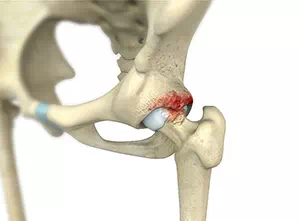
Femoroacetabular impingement (FAI) means the ball and socket of your hip physically collide because one or both grew with extra bone. In a well-shaped hip, the ball glides through a full arc of motion. In an impinging hip, that arc has a hard stop, and soft tissue gets pinched at it. There are two patterns, and most patients have some of both:
- Cam impingement. The ball is not perfectly round. A bump at the junction of the ball and neck jams into the socket rim during deep flexion, shearing the cartilage and labrum from the inside. Cam shapes are especially common in athletes who trained hard through adolescence.
- Pincer impingement. The socket rim extends too far, over-covering the ball. The rim and the labrum on it get crushed against the femoral neck with motion.
FAI is a mechanical, structural problem. That single fact explains both why exercises alone cannot cure it and why correcting the shape works.
Symptoms of FAI
The classic symptom is deep groin pain brought on by hip flexion and rotation. Patients commonly report:
- Pain with squatting, lunging, or sitting in low seats
- Aching groin or front-of-hip pain after prolonged sitting or driving
- Sharp catches when pivoting, cutting, or getting out of a car
- Stiffness and loss of rotation, noticed in sports or putting on shoes and socks
- Pain at the side of the hip or in the buttock in some patterns, occasionally with clicking
Symptoms usually build over months. Many athletes first blame a groin strain that never quite resolves.
Why FAI Damages the Hip Over Time
Every deep bend of an impinging hip pinches the labrum and shears the cartilage beside it, and the damage accumulates. The labrum, the cartilage ring that seals the socket, frays and tears under repeated crushing; most hip labral tears Dr. Gombera treats sit directly over an impingement lesion. Joint cartilage suffers next as the cam bump grinds it with each cycle. This is why FAI is a leading cause of early hip arthritis, and why correction matters most while the cartilage is still worth protecting.
How FAI Is Diagnosed
Dr. Gombera diagnoses FAI by matching your story to a focused exam and targeted imaging. On exam, he reproduces your pain with impingement maneuvers, deep flexion with inward rotation, and compares rotation side to side. Imaging then defines the shape:
- Standing X-rays with hip-specific views show the cam bump, socket over-coverage, screen for dysplasia, and grade any arthritis.
- MRI, often with contrast dye (an MR arthrogram) shows the labrum and cartilage, revealing tears a standard scan can miss.
- 3D CT scan maps the exact bone shape when surgery is planned.
A diagnostic numbing injection settles any doubt about whether pain truly comes from inside the joint.
Discover Your Ortho Options
Treatment: Conservative First
Non-surgical care is the honest first step for most patients with FAI, and some never need more:
- Activity modification, 4 to 6 weeks. Temporarily avoid deep squats, low chairs, and the specific motions that pinch, while staying active in pain-free ranges.
- Anti-inflammatory medication. A short course to quiet the irritated joint, when medically appropriate.
- Physical therapy, typically 6 to 12 weeks. Core and gluteal strengthening improves how the pelvis moves over the ball and often reduces symptoms meaningfully, even though it cannot reshape bone.
- Image-guided injection. Reduces inflammation and doubles as a diagnostic test.
When symptoms persist through this ladder, more therapy rarely rescues the situation, because the pinch is structural.
FAI Surgery: What Correction Involves
Surgical correction reshapes the bone so the pinch no longer happens, and repairs what the pinch has torn. Through quarter-inch incisions during hip arthroscopy, Dr. Gombera shaves the cam bump back to a round femoral head, trims socket over-coverage where it crushes the labrum, and stitches the torn labrum back to the rim in the same procedure (see arthroscopic hip labral repair, /arthroscopic-hip-labral-repair.html). Precision is the entire game: under-resection leaves the impingement, and it is the most common reason hips need revision surgery.
Dr. Gombera performs the correction with postless distraction, a capsule-sparing approach, and ultra-low radiation fluoroscopy: 2 to 3 seconds of fluoroscopy per surgery, measured and documented. He is the only surgeon in Texas, and one of only a few in the world, performing hip arthroscopy with an ultra-low radiation approach. Most patients go home the same day, and athletes typically return to sport at approximately 6 months. The full recovery arc lives on the hip arthroscopy, and the philosophy behind it at the Hip Preservation Center.
When to See a Doctor
See a specialist if groin pain has recurred for more than a few weeks, if squatting or prolonged sitting reliably provokes it, or if you feel catching, locking, or lost rotation. Seek prompt care for a hip that will not bear weight, locks completely, or hurts at rest and at night. FAI diagnosed early is one of the most fixable problems in orthopedics; diagnosed late, it can already have spent cartilage you cannot get back.
Discover Your Ortho Options
Frequently Asked Question
Is FAI the same thing as hip arthritis?
No. FAI is a shape problem in a hip whose cartilage is still largely healthy; arthritis is the loss of that cartilage. The two are connected because untreated impingement can grind away cartilage over years and lead to early arthritis. Correcting FAI at the right time is intended to interrupt exactly that sequence.
Can FAI go away on its own?
The bone shape never changes on its own, but symptoms can. Many people calm their pain with activity changes and physical therapy and stay comfortable for long stretches. If pain keeps returning whenever you resume deeper hip motion, the impingement is still mechanically active and deserves imaging and a specialist opinion.
I have a cam deformity on X-ray but no pain. Do I need surgery?
No. Plenty of pain-free hips show cam or pincer shapes on imaging, and surgery is not recommended for X-ray findings alone. Treatment is for symptomatic FAI: the combination of impingement shape, matching exam findings, and pain that limits your life. A painless cam deformity warrants awareness, not an operation.
Can I keep playing sports with FAI?
Often yes, with modifications, if pain stays mild and your exam shows no progressive damage. The risk of playing through significant pain is ongoing labral and cartilage injury, since each deep flexion repeats the pinch. An evaluation with proper imaging tells you whether you are managing symptoms or accumulating damage.
Will stretching fix hip impingement?
Stretching cannot remove the bone that causes the pinch, and aggressive stretching into deep flexion can actually provoke symptoms. What helps is the opposite: strengthening the core and hip stabilizers while temporarily avoiding the positions that impinge. A hip-literate physical therapist makes that distinction early.
What happens if FAI is left untreated?
Some hips stay quiet for years. In others, every deep bend keeps pinching the labrum and shearing cartilage, which is why FAI is a recognized driver of early hip arthritis. Persistent groin pain with impingement findings deserves evaluation, because cartilage that wears away cannot be restored later.