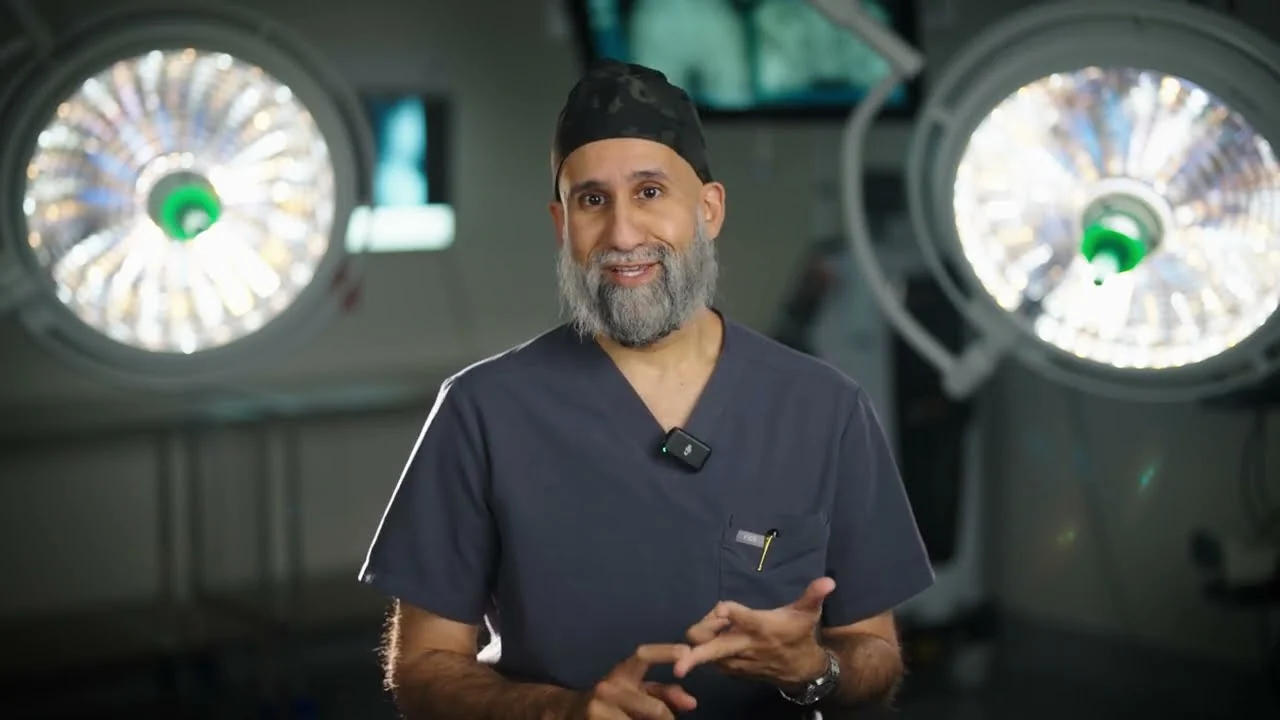
Medically reviewed by Mufaddal M. Gombera, MD, Board-Certified Orthopedic Surgeon.
Dr. Mufaddal Gombera is board-certified in orthopedic surgery with subspecialty certification in sports medicine, and gluteus tendon tears are among the most frequently missed diagnoses he sees at the Hip Preservation Center at Texas Orthopedic Hospital, which he has directed since 2018. He treats patients in English and Spanish. If outer hip pain has been treated as bursitis for months without lasting relief, the tendons underneath deserve a closer look.
The Rotator Cuff of the Hip
The gluteus medius and gluteus minimus are to your hip what the rotator cuff is to your shoulder: deep muscles whose tendons anchor to bone and quietly stabilize the joint. They attach to the greater trochanter, the bony knob on your outer hip, and hold your pelvis level whenever you stand on one leg, which is half of every step. Like the rotator cuff, these tendons fray and tear, sometimes suddenly, more often through years of wear. And like rotator cuff tears, they are common, treatable, and frequently misdiagnosed.
Symptoms of a Gluteus Tendon Tear
Abductor tears announce themselves with a cluster of symptoms on the side of the hip:
- Pain centered over the outer hip, often radiating a short way down the outer thigh
- Night pain when lying on the affected side
- Weakness lifting the leg out to the side, or trouble with stairs and getting out of a car
- A limp: the pelvis dips with each step, and others may notice the lurch before you do
- Pain and fatigue with longer walks, and unreliability on one-leg tasks such as dressing
Pain is the loudest symptom, but weakness and the limp are the telling ones. Bursitis hurts; it does not usually make you weak.
Discover Your Ortho Options
Often Misdiagnosed as Bursitis
The most common story Dr. Gombera hears is a year of treatment for hip bursitis: rest, therapy, and cortisone shots that each help briefly. The bursa sits directly on top of the gluteus tendons, so a torn tendon inflames the bursa above it; the bursitis label is not wrong, just incomplete. Injections calm the bursa while the tear underneath persists or enlarges. The clues that it is more than bursitis: weakness on exam, a limp, pain outlasting six to eight weeks of proper treatment, and injection relief that keeps getting shorter.
What Causes Hip Abductor Tears
Age-related tendon wear. The most common pathway. Tendons degenerate with the decades, and tears are especially frequent in women over 50, often without any single injury.
Chronic overload. Years of running, hiking, or work on the feet can fray the tendon attachment gradually.
A distinct injury. A fall onto the side of the hip or a sudden violent movement can tear a healthy or already-worn tendon.
Associated conditions. Long-standing greater trochanteric pain syndrome, iliotibial band problems, and hip arthritis travel with abductor tears.
Previous hip surgery. Some tears follow earlier procedures around the hip.
How Dr. Gombera Diagnoses Abductor Tears
The exam is designed to test the tendons directly, not just find the sore spot. Dr. Gombera checks for tenderness over the greater trochanter, measures side-lifting strength against resistance, and uses the single-leg stance test: standing on the affected leg reveals whether the pelvis holds level. A pelvis that drops toward the opposite side, the Trendelenburg sign, points strongly to the abductors.
Imaging then confirms and sizes the problem. X-rays screen the joint for arthritis and other bone causes. MRI is the key study: it distinguishes partial from full-thickness tears, measures retraction, and grades the muscle’s condition, which predicts how well a repair will hold. Ultrasound is a useful alternative and can guide injections precisely.
Discover Your Ortho Options
Treatment: Conservative First
Most partial tears and degenerative tendon changes are managed without surgery, and Dr. Gombera starts there deliberately:
- Activity modification, 2 to 6 weeks. Reduce the aggravating load, avoid lying on the painful side, and let the acute irritation settle.
- Anti-inflammatory medication in a short course, when medically appropriate.
- Structured physical therapy, 6 to 12 weeks. Progressive strengthening of the gluteal muscles is the core treatment and meaningfully improves pain and function in most partial tears.
- Selective injections. An occasional image-guided injection can calm the overlying bursa; orthobiologic options such as platelet-rich plasma exist for tendon problems, offered with honest framing about developing evidence.
When Repair Is the Right Move
Surgery enters the conversation when a full-thickness tear causes weakness or a limp, or when a symptomatic partial tear has failed a genuine course of conservative care. Repair reattaches the torn tendon to the greater trochanter so the muscle can hold your pelvis level again; timing matters, because large tears retract and the muscle deteriorates the longer they wait. Dr. Gombera performs both endoscopic and open repair, choosing based on tear size and tissue quality. The full details, including the honest recovery timeline, are on the gluteus tendon repair, and the Hip Preservation Center team evaluates complex and previously treated cases regularly.
When to See a Doctor
See a specialist if outer hip pain has lasted more than a few weeks, if you notice weakness or a new limp, or if bursitis treatment keeps failing. Seek prompt care after a fall with inability to bear weight, or for hip pain with fever or spreading redness. The practical rule: pain plus weakness on the side of the hip is a tendon question, and it should be answered with an exam and an MRI, not another injection.
Discover Your Ortho Options
Frequently Asked Question
Is a gluteus tendon tear the same as hip bursitis?
No, but they are next-door neighbors and feel similar. Bursitis is inflammation of the cushioning sac over the outer hip; a gluteus tendon tear is structural damage to the tendons directly beneath it. Tears cause weakness and a limp in addition to pain, and they do not resolve with the rest and injections that settle bursitis.
Can a gluteus tendon tear heal on its own?
Partial tears can become comfortable and functional with physical therapy that strengthens the surrounding muscle, even though the torn fibers do not knit back together. Full-thickness tears do not heal on their own, and the tendon tends to retract over time. That is why persistent weakness matters more than pain when deciding on repair.
Why do I limp with a gluteus tendon tear?
The gluteus medius and minimus hold your pelvis level every time you stand on one leg. When their tendons tear, the pelvis drops toward the opposite side with each step, producing the characteristic lurching limp called a Trendelenburg gait. The limp comes from weakness more than pain, which is why it persists even on good days.
Do I need an MRI to diagnose an abductor tear?
Usually, yes. The exam raises the suspicion, but an MRI confirms the tear, measures its size and retraction, and shows the quality of the muscle, all of which shape treatment. X-rays alone cannot show tendons. If your outer hip pain has failed months of bursitis care without tendon imaging, the diagnosis is incomplete.
What happens if a gluteus tendon tear is left untreated?
Small tears may stay stable for years with good strength work. Larger tears tend to enlarge, the tendon retracts, and the muscle weakens and turns fatty, changes that make later repair harder and less reliable. Untreated tears also feed chronic limping, which overloads the back, knee, and opposite hip.
Can cortisone shots make a tendon tear worse?
Repeated corticosteroid injections can weaken tendon tissue, and a long series of shots into the outer hip without imaging is a common part of the missed-tear story. An occasional injection has a place for calming inflammation, but recurring pain after injections is a signal to image the tendons, not to inject again.
Does Dr. Gombera speak Spanish?
Yes. Dr. Gombera treats patients in both English and Spanish, so Spanish-speaking patients can discuss their diagnosis, imaging, and treatment options directly with him, without needing an interpreter. His three Houston-area offices serve patients from across the region.
Schedule a Gluteus Tendon Tears Consultation in Houston
Dr. Gombera evaluates gluteus tendon tears at Texas Orthopedic Hospital (7401 Main St), the Memorial office (8731 Katy Freeway, Suite 110), and the Baytown office (7718 Garth Rd). Same-week consultations are available.