Medically reviewed by Mufaddal M. Gombera, MD, Board-Certified Orthopedic Surgeon.
Dr. Mufaddal Gombera is board-certified in orthopedic surgery with subspecialty certification in sports medicine. He served as an assistant team physician for Northwestern University football, the Chicago Cubs, and the Chicago Blackhawks during his time in Chicago, and he currently serves as a team physician for Texas Southern University, so he manages unstable shoulders in athletes every season. If your shoulder has dislocated, slips in certain positions, or simply feels like it cannot be trusted, the most important decisions come early, especially after a first dislocation.
What Is Shoulder Instability?
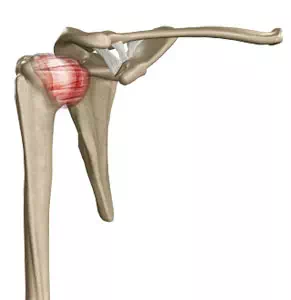
Shoulder instability means the ball of the shoulder does not stay reliably centered in its socket, ranging from a subtle slipping sensation to repeated full dislocations. The shoulder trades stability for motion: the socket is shallow, like a golf ball on a tee, and stability depends on the labrum, the cartilage rim that deepens the socket, plus the capsule and ligaments. When those structures are torn or stretched, usually by a dislocation, the joint can keep slipping. A partial slip that self-reduces is a subluxation; a complete separation is a dislocation.
Symptoms: Apprehension and a Shoulder You Cannot Trust
The defining symptom of instability is apprehension, the feeling that the shoulder is about to give way in certain positions. Common experiences include:
- Guarding or fear with the arm raised and rotated back, the classic throwing position
- A dead-arm sensation after a hard throw, swing, or hit
- Repeated subluxations or dislocations with less and less force each time
- Pain deep in the shoulder with overhead work or sport
- A sense of looseness, popping, or shifting rather than constant pain
Some patients hurt very little between episodes, but each slip can add damage to the labrum, cartilage, and bone.
The First-Time Dislocation Decision
The most consequential decision in shoulder instability comes after the first dislocation, and it hinges on recurrence risk. That risk is driven mostly by age at the first dislocation:
- Under 20 and athletic: recurrence risk is very high. Studies report repeat dislocation in as many as 80 to 90 percent of young contact athletes treated without surgery.
- 20s to 30s: risk remains substantial, especially with contact or overhead sports.
- Over 40: recurrence is much less common, but the same injury frequently tears the rotator cuff instead, so persistent weakness needs a rotator cuff evaluation.
Here is the honest discussion Dr. Gombera has with young athletes and their families: rehab alone often fails to prevent recurrence in this group, and every additional dislocation can shave bone off the socket rim, making later surgery bigger and less predictable. Early stabilization after a first dislocation is a legitimate, evidence-supported choice for a high-risk athlete. For older or lower-demand patients, structured rehab first is usually the right call. You deserve the actual numbers, not a one-size recommendation.
How Dr. Gombera Diagnoses Instability
Diagnosis rests on your history, a stability-focused examination, and imaging that measures what was damaged. The examination reproduces apprehension safely and checks how far the ball translates in each direction. X-rays screen for bone injury. MRI, often with contrast dye, shows the capsule and any labral tear pattern. When dislocations have recurred, a CT scan quantifies bone loss on the socket and ball, often the deciding factor between a soft tissue repair and a bone procedure.
Treatment: Rehab for Some, Early Stabilization for Others
Treatment is matched to your recurrence risk and anatomy, not a fixed protocol. The conservative path includes brief sling comfort, then progressive therapy to strengthen the rotator cuff and shoulder blade stabilizers, with gradual return to sport, sometimes braced. Surgery enters the conversation when:
- You are a young or contact athlete with a high recurrence risk after a first dislocation
- Dislocations or subluxations recur despite quality rehab
- Imaging shows a significant labral tear, capsular injury, or bone loss
Most stabilizations are performed as arthroscopic Bankart repair (/arthroscopic-bankart-repair.html), reattaching the labrum and tightening the capsule through small incisions. When bone loss or failed prior repairs make a soft tissue fix unreliable, Dr. Gombera discusses the full range of shoulder instability surgery (/shoulder-instability-surgery.html) options, including bone transfer procedures, and tells you plainly which one your anatomy requires.
When to See a Doctor
See a specialist after any full dislocation, and sooner rather than later if you are a young athlete. Seek prompt evaluation for:
- A first dislocation in a patient under 25, where the stabilization discussion matters most
- Numbness, tingling, or weakness after a dislocation
- A shoulder that keeps slipping with everyday activities
- New weakness after a dislocation in a patient over 40, which suggests a rotator cuff tear
Discover Your Ortho Options
Frequently Asked Question
Will my shoulder dislocate again after a first dislocation?
It depends heavily on your age and activity. In athletes under 20, studies report recurrence rates as high as 80 to 90 percent with non-surgical treatment, especially in contact sports. Risk declines with age: patients over 40 redislocate far less often, though they are more likely to tear the rotator cuff instead.
Can shoulder instability be fixed without surgery?
Sometimes. A structured rehabilitation program strengthens the rotator cuff and shoulder blade muscles that help hold the ball centered, and it works best for looseness without a significant labral tear. Rehab cannot reattach a torn labrum or restore lost bone, which is why young contact athletes with structural damage often still dislocate after excellent therapy.
What is a Bankart tear?
A Bankart tear is a tear of the labrum, the cartilage rim around the socket, at its front lower edge. It is the classic injury of an anterior dislocation, and it removes the bumper that normally keeps the ball from slipping forward. Repairing it with small anchors, called arthroscopic Bankart repair, is the most common stabilization surgery.
What does shoulder apprehension mean?
Apprehension is the sense that your shoulder is about to slip out when the arm is placed in a vulnerable position, typically raised and rotated back like a throwing motion. It is often more prominent than pain: patients describe guarding, avoiding certain reaches, or a dead-arm feeling overhead. Apprehension is a key examination finding for instability.
How soon after a dislocation can I return to sports?
Many athletes regain motion and strength within a few weeks, but returning that quickly carries a real risk of redislocating, particularly mid-season in contact sports. Some athletes brace and finish a season, accepting that risk. After stabilization surgery, return to contact sport typically takes 4 to 6 months. Dr. Gombera maps both paths honestly.
What happens during shoulder stabilization surgery?
Most stabilizations are arthroscopic: through small incisions, the torn labrum is reattached to the socket rim with suture anchors and the stretched capsule is tightened. When bone loss from repeated dislocations is significant, a bone transfer procedure may be recommended instead, because a soft tissue repair alone would likely fail. The right operation depends on your anatomy.
Schedule a Shoulder Instability Consultation in Houston
Dr. Gombera evaluates unstable shoulders at Texas Orthopedic Hospital (7401 Main St), the Memorial office (8731 Katy Freeway, Suite 110), and the Baytown office (7718 Garth Rd). Same-week consultations are available for recent dislocations.